A Beautiful Timeline Visualisation: TimelineJS by VéritéCo

Last week, as I was looking for good websites and twitter users to follow the students’ movement in Quebec, its support by and links to the other worldwide opposition movements, and to try to assess how it could evolve, I found this really useful, informative and beautiful website displaying a timeline of the events done by Xavier K. Richard, @xkr.

Today, I found that this timeline, or rather the incredible tool to make such a timeline, TimelineJS, created by VéritéCo, is a free web-based application. I could not resist the temptation to try it, continuing on the series of timelines created for “the Tragic Events that strike Everstate.” It is truly very easy to use (just use the Google spreadsheet template provided on the website, and enter your data instead of those given as example), then follow the directions given on the TimelineJS website and, finally, embed it on your website. You can include videos and photographs, and, compared with the two others that were previously tried, you can create as many timelines as you want, which is a great advantage.

Here is the result:

The Deep-Sea Resources Sigils Brief

Why a Sigils focused on Deep-Sea Resources?

Human societies currently face dwindling resources and rising competition for them in the contemporary “resources order.”

Thus, besides and in accordance with other ways to handle this challenge, new types and sources of resources are increasingly valuable and can make a strategic difference for polities, as well as for humanity as a whole. Meanwhile, if we are to ever learn from our worrying present, we must also, continuously, make sure that the extraction and use of those new potential resources will not have any unfavourable impact on the planet and its ecosystem, including this biodiversity to which we belong.*

World Bank – Global Economic Prospects January 2012 – Commodity Annex

As has now been known since the end of the nineteenth century (Ifremer, les Nodules, 2012), mineral resources lie on the seabed, and the rising price of commodities, symptom of the current trial, as well as technological progress, make them increasingly attractive.

Actually, following the Ifremer categorisation, three types of resources – energetic resources, marine minerals and biological resources – are located on the seafloor, sea floor, ocean floor or seabed.

Political and international rule over and organisation of the seafloor

The United Nations Convention on the Law of the Sea (UNCLOS 1982) and the 1994 Agreement on Implementation consider all marine “solid, liquid or gaseous mineral resources,” (UNCLOS 1994) “in an International Area beyond the outer limits of the continental shelf,” as the “common heritage of mankind.” (Rona 2003, UNCLOS 1982). This notably led to the creation of the International Seabed Authority (ISA).

However, within the limit of the continental shelf, marine minerals, as other resources, are under the sovereignty of countries, according to international laws:

Each coastal State has a continental shelf that is comprised of the seabed and subsoil of the submarine areas that extend beyond its territorial sea throughout the natural prolongation of its land territory to the outer edge of the continental margin, or to a distance of 200 nm from its baselines where the outer edge of the continental margin does not extend up to that distance (or out to a maritime boundary with another coastal State).
Wherever the outer edge of a coastal State’s continental margin extends beyond 200 nm from its baselines, it may establish the outer limit of its continental shelf in accordance with Article 76 of the UN Convention on the Law of the Sea. The portion of a coastal State’s continental shelf that lies beyond the 200 nm limit is often called the extended continental shelf. A coastal State has sovereign rights and exclusive jurisdiction over its continental shelf for the purpose of exploring it and exploiting its natural resources…
” (NOAA )

According to the nomenclature used by ISA (Technical Study 1), the extended continental shelf is constituted of Extended Continental Legal Shelf regions (ECLS), represented by 45 numbered areas shared among fifty-five regions, including the Antarctica. Most states had to lodge a submission for claim over their extended continental shelf by 13 May 2009. By 1st December 2009, 44 states had lodged 51 submissions and 40 states had submitted 44 Preliminary Information Documents, indicating the intended date of making a submission (UNEP/GRID-Arendal, 2009). Canada, for its part, will only lodge its submission “to the Commission by the end of 2013.” Although the U.S. has not signed the UNCLOS (1982), and signed but not ratified the 1994 Agreement, and although debate on this matter is recurrent within the U.S, notably before elections, it is nevertheless trying to define its extended continental shelf as is explained by the U.S. Extended Continental Shelf Project, which also shows how complex the process is. The legal status of the Antarctica remains frozen (UNEP/GRID-Arendal, 2009).

Continental Shelf: The Last Maritime Zone, p.17, Published by UNEP/GRID-Arendal Copyright © 2009, UNEP/GRID-Arendal

Once all claims are submitted, examined and settled, which will not happen before May 2019, considering the remaining existing deadlines for submission and the uncertainty regarding the U.S., the geopolitical map of the world will be substantially redrawn, as may be expected from the figure above.

Now we understand who has jurisdiction over the sea floor, let us see what lies there, according to current knowledge. We are still in a phase of multiple exploration as much in terms of ecosystem as for referencing and locating the various resources themselves, including the minerals.

What are deep-sea resources?

Ecosystems and deep-sea biological life

An ongoing effort is taking place that allows us to start knowing and understanding the deep-sea marine ecosystem and biological life. It gives new database such as, for example, CenSeam: a Global Census of Marine Life on Seamounts and Seamountsonline. Much is still, however, unknown, and discoveries are made almost everyday. For example, Ifremer, official contractor of ISA for seabed exploration conducted from March to May 2012 the BIONOD (biodiversity and nodule) campaign that aims at creating a strategy to preserve deep-sea biodiversity in areas where polymetallic nodules are present.

According to Ifremer (9 janvier et 24 fevrier 2012), biological resources can be classified as follows:

  • Deep-sea fish: new types of fish could be fished and used for human diet;
  • Micro-organisms (hydrothermal vents): useful for biotechnology.

Marine Mineral Deposits

James R. Hein, Potential deep-ocean metal resources – slide 8 – in Rare Earth Elements’ Presentation, 2012

To date, the known and referenced marine mineral deposits are as follows (from Hein 2012, presentations, except if specified otherwise):

  • “Manganese (or polymetallic) nodules (formed on the vast deep-water abyssal plains)”.
    Contain manganese and iron oxides, significant amounts of nickel and copper; rare metals such as Lithium, Molybdenium, Zirconium; rare earth elements.
  • “Ferromanganese crusts (formed on 100.000 seamounts)”.
    Cobalt, Nickel, Manganese; rare metals such as Bismuth, Niobium, Molybdenium, Platinum, Tellurium, Thorium, Zirconium; rare earth elements.
  • “Seafloor massive sulfides (formed at hydrothermal vents along 89000km ridges)”.
    Rich in Copper, Zinc, Lead, Barium, Silver, Gold, and other rare metals, such as Antimony, Cadmium, Gallium, Germanium, Indium, Selenium. The quality and quantity are often vastly superior to land-based deposits (considering current rate of depletion).
  • Marine Phosphorite (seamount deposits, insular and lagoonal deposits, shelf deposits, epicontinental-sea deposits).
    Pure phosphorite, minor phosphate minerals, may also include rare earth elements (seamount phosphorite deposits).
  • Diamonds: those are already mined off Namibia and adjacent South African coast, notably by De Beers Marine (ISA brochures). According to Ifremer (janvier 2012), 50% of the company’s production is marine and De Beers has started the deep sea exploitation.
  • Placers (sediments): tin, gold, platinum, titanium. According to Ifremer (janvier 2012), 7% of the world tin production is marine and done mainly by Malaysia, Thailand and Indonesia.

In the deep ocean (below 2000 meters), the three first types of deposits are the most important (Ifremer).

Energetic Resources

  • Deep-sea oil (below 2000 meters): technical challenges must still be faced for both exploration and exploitation (Ifremer, 23 février 2012).
  • Methyl hydrates: “a mixture of natural gas and water compressed into a solid by the cold and high pressures of the deep ocean floor in undersea basins of the continental margins” (ISA brochure). Their estimation is still very uncertain. Their exploitation could lead to very serious dangers in terms of climate change with release of large quantity of methane, and other environmental damages, such as marine landslides and unbalancing of the ecosystem. Ways to completely overcome those dangers must be found before any exploitation starts. (Ifremer, 23 février 2012).
  • Ocean Thermal Energy Conversion.

Where are deep-sea resources located?

Since, in 2003, Peter Rona underlined that “We possess only a preliminary knowledge of their [marine minerals] diversity and distribution… The continental margins of whole continents remain to be explored. Less than 5% of the sea floor is known in sufficient detail to find hydrothermal mineral deposits at and away from plate boundaries,” we have now improved our knowledge. Exploration has progressed, and here is a current map of resources on the seabed, thanks to the great public interactive mapping website by the International Seabed Authority (ISA).

Estimates of deep-sea resources’ value

In 2000, the ISA estimated the potential of eight non-living resource (including oil & gas and gas hydrates) within the Extended Legal Continental Shelf regions (ECLS) worldwide to USD 11934 trillions (June 2000 commodity prices. To give an element of comparison, the price of copper (Cu) was 1739USD/mtu in June 2000, and 8289/mtu in April 2012. The World Bank forecasts (and others, e.g. Suplacz, 2012; Bloomsbury Minerals Economics), see, however, a coming decrease in the price of copper that should nevertheless remain above a low in 2018 at 5500USD/mtu).

When will deep-sea resources be available and with which likelihood?

Currently, if patents of exploitation for deep-sea mineral mining have been granted, the most advanced project is Solwara 1, in the Bismarck Sea in Papua New Guinea. The mining lease has been granted to the Canadian Company Nautilus Minerals. Exploitation is expected to start “by the end of 2013 with the mining of ‘high grade’ Seafloor Massive Sulphide deposits that contain copper, gold, silver, zinc and lead” (ISA newsletter, Issue 8 – June 2011). This project is criticised on environmental grounds, see, for example, Solwaramining.org.

Actually, there is no easy and straightforward answer to a “when will deep-sea resources be exploited.” Ifremer (FAQ) sees the time-line for the exploitation of nodules (logic that can be applied to other resources), as depending upon four variables:

  1. solving technical and environmental problems;
  2. commodity prices (and the need for some stability);
  3. increased industrial growth;
  4. clarification of law-related problems.

The first variable is definitely crucial. As for the second one, if commodity prices are most likely to increase, it is, however, unlikely that they stabilise, considering the current resources order. A stability of prices is wishful thinking. We might thus change the Ifremer variable for an anticipation of unmet needs through current land deposits within a coherent time-frame, which thus links this variable to a detailed foresight study of supply and demand, and thus of the whole economic, financial and political (the future of governance) situation. From there, prices could be deducted, but also, we could break free of the dictatorship of profit and come back to more fundamental notions such as real needs. The second cluster of variables would also cover the third Ifremer variable. Meanwhile the future of governance will most probably have bearings on the legal imperative.

The likelihood will be dependent upon the same variables (conditional probabilities) and would need to be precisely estimated through a Bayesian Network. Once more, this pleads for an approach done through mapping.

Without such in-depth studies, it is impossible to deliver a judgement on time-line and likelihood with high confidence (using the system of the US IC assessments). However, we may provide likelihood and timeline estimates with moderate confidence.

Annex, p.13. Extract – Global Water Security INTELLIGENCE COMMUNITY ASSESSMENT ICA 2012-08, 2 February 2012

Short of a complete collapse of our civilisation, to date, we can estimate that, considering the resourcefulness, imagination and creativity of human beings, their genius in overcoming challenges and finding solutions, it is very likely (using again the system and language of the US IC assessments) that deep-sea resources will be used, and likely that they will be used in the proper ecological way.

Exploitation within non problematic ECLS under state’s sovereign jurisdiction can be estimated to start within 5 to 10 years, as the current multidimensional crisis could also prompt renewed emphasis on search for new solutions. Novel elements and data can alter this time-line considerably.


The graph below shows a graphical summary of the assessment resulting from this brief.

In conclusion

Once the new geopolitical map of the world is redrawn to include the seabed, and once exploration is completed, the potential relative power position of countries will change, as much in terms of resources endowment as in terms of being or rather becoming ecosystem guardians, with all the responsibilities and multi-faceted tensions that may be born of the emergence of such new roles. Furthermore, new elements of solutions to the current global challenge related to resources as well as to the way to proceed when global governance is needed for global commons may be found here, in the deep-sea resources and related underlying dynamics.

For all these reasons, as well as to overcome the uncertainty on likelihood, time-frame, and still lack of understanding on ecosystems, it is important and even crucial to monitor development in the field of deep-sea resources, which may well be one of the most important strategic global issues of the future. This monitoring will be done with the Deep-Sea Resources Sigils.

————-

* Incidentally, there may be a fundamental contradiction to a sustainable approach when we transform everything into “resources,” if this term is solely understood as factor of production. The etymology of “resource” -”means of supplying a want or deficiency” – may be less dangerous. Using the newer ecosystem services nomenclature is hardly better, as, again, everything tends to be viewed into trading and consumerist terms. For want of another satisfactory term that would be universally understood, I shall use here the term of resources, but bearing in mind its shortcomings.

References

Ben-Gal I., Bayesian Networks, in Ruggeri F., Faltin F. & Kenett R., Encyclopedia of Statistics in Quality & Reliability, Wiley & Sons (2007).

Bloomsbury Minerals Economics (BME), update of “The Short-, Medium- and Long-term Outlook for the Price of Copper” – summary – (date?).

Foreign Affairs and International Trade Canada, Canada’s Extended Continental Shelf, Overview, 17 October 2011.

Hein, James R. “Overview of the mineral resources of the Area,” Presentation, and “Rare Earth Elements,” Presentation, Sensitisation Seminar On The Work Of The International Seabed Authority And Current Issues Relating To Deep Seabed Mining, United Nations Headquarters, New York, 16 February 2012

Ifremer, “Campagne BIONOD : les champs de nodules à l’étude dans le Pacifique nord-est,” 23/03/2012.

Ifremer, Des éléments de réponses à ces différentes questions, 23 février 2012.

Ifremer, Les hydrocarbures sous-marins, Les hydrates de gaz naturel, 23 février 2012.

Ifremer, Les Nodules, 24 février 2012.

Ifremer, Les ressources biologiques; La pêche profonde; Les applications en biotechnologie; 9 janvier et 24 février 2012.

Ifremer, Les ressources minérales, 9 janvier 2012.

International Copper Study Group.

International Seabed Authority (ISA)

ISA, Global non-living resources on the extended continental shelf: Prospects at the year 2000. Technical Study: No.1.

ISA, Marine Mineral Resources, brochures.

Marine et Oceans,”L’Ifremer étudie les champs de nodules polymétalliques,” 23 Mai 2012

Mero, J. L. The Mineral Resources of the Sea, (Elsevier, Amsterdam, 1965).

Suplacz, Jaroslaw, “Copper Price Forecast, The Fall of The Chinese Miracle 2012,” The Market Oracle, Feb 15, 2012.

UNEP/GRID-Arendal, Continental Shelf: The Last Maritime Zone, 2009.

World Bank – Global Economic Prospects January 2012 – Commodity Annex

2018 – 2023 EVT – Escalation (Mamominarch)

Last weeks’ summary: In 2012 EVT, Everstate (the ideal-type corresponding to our very real countries created to foresee the future of governance and of the modern nation-state) knows a rising dissatisfaction of its population. To face the various difficulties and widespread discontent, in a first scenario, Everstate’s governing bodies implement the Mamominarch programme of drastic reduction of state’s spending. By 2018 EVT, the result is involution, with a rising insecurity for most Everstatans. The now fragile state cannot efficiently manage the complex catastrophes that start hitting Everstate in May. As a result, tension rises relatively uniformly while grievances increase heterogeneously. Inability to answer this multiform situation leads to a new political mobilisation, besides the classical old parties, proponents of Mamominarch: movements for local independence and direct membership in the Regional Union, including a powerful Movement for the Independence of the Trueland on the one hand, and a Movement for the Renewal of Everstate on the other.

(The reader can click on each picture to see a larger version in a new tab – a navigating map of posts is available to ease reading).

News of the terrorist attack on Novcybio International abroad, which had first gone viral among Renewers, lead to a sudden awareness that Everstate could be impacted. What if some of the last genetically modified seeds received by Novcybio Everstate for testing that have already been planted include the dangerous gene engineered by the terrorists? How can Everstatans know? What if, one day, terrorists were to conduct such an attack directly in Everstate?

In August, as soon as Novcybio International had become aware of the threat, its security service had immediately acted, while its PR team started a reassuring campaign, explaining that everything was under control, that the police force had recovered the stolen deadly pathogens and that all potentially dangerous seeds had been identified, and most of them traced and recalled. Now, only a few of them are still missing, but Novcybio International headquarters’ security is working hand in hand with its branches and the authorities of the various countries potentially impacted. Unfortunately, Everstate is on the list of those countries. Soon, Everstate’s central government, the local authorities of the Continental South-East and Novcybio Everstate issue a joint statement asserting that the incriminated seeds have been found, that none of them has thus been planted and that they have now been destroyed.

However, investigations carried out by Renewers point out that one month elapsed between the terrorist attack on Novcybio International and the Everstatan joint statement. The Movement thus accuses the involved actors of complacency, which threatens the security of all Everstatans. This, added to the fresh memories all Everstatans have of the way the complex catastrophes of the Spring were mishandled, implies that few Everstatans fully believe the official joint-statement. People ask for evidence and for the resignation of all political actors involved. Rumours start spreading. This is an impact of the degraded legitimacy presiding over Everstate. The local authorities, seeing their authority imperilled and their power threatened, start distancing themselves from the central authorities, accusing them of inefficiency and saying they did not provide all necessary help. They turn to the Regional Union to ask for further test and control of Novcybio Everstate.

They also try to join the Movement for the Independence of the Trueland, arguing that Trueland covers the whole South-East, and not solely its maritime façade. However, the Truelanders’ leaders reject the idea, as they see the Novcybio affair and the continuing rumors as one more reason to distance themselves from the rest of the country, for the security of real Truelanders. The local authorities of the Continental South-East, as their position is directly threatened on the one hand, as they feel rejected and cornered on the other, then become even more virulent than other proponents of the various local movements for independence, while also starting a campaign explaining that the Trueland cannot be divided between a maritime and continental part.

By StMH (Own work), GFDL or CC-BY-SA-3.0-2.5-2.0-1.0, via Wikimedia Commons

One night Novcybio Everstate is burnt to the ground with the test crops planted on its land. Immediately, the Regional Union and various countries appeal to Everstate’s central government to put its house in order, while Novcybio International asks for compensation. When central officers are sent to the site of the arson to investigate, they are denied entry by angry citizens. As they ask for police support, local authorities refuse it, arguing that they will deal with the problem, which does not concern in any way central authorities.

Everstate’s central political authorities should answer to this direct denial of their power by imposing their will, sending the army if need be. However, considering the highly tense situation, they hesitate, afraid of the consequences. Furthermore, Novstate, which provides both some of the police forces of the Continental South-East and many of the Everstatan armed forces, does not favour seeing its men fighting each other.

The new episode of the global financial crisis that starts in October lessens the international political pressure put on Everstate to remedy to its internal disorder. Other countries, as well as the Regional Union, are now focused on other more important matters. For Everstate, the new general break on liquidity that ensues, as the country is still as dependent as ever on international borrowing, means that it must face new difficulties to pay its remaining central civilian and military staff. Local authorities are also impacted, however in various ways according to the situation of each city and region. Everstate does not participate in the international discussions trying to deal with the global financial disorder, except through Novstate, which is present along other powerful private sector’s representatives.

Italian sphere of influence in Turkey according to the agreements of 1917 in Saint-Jean-de-Maurienne by Arthur James Balfour (1848-1930), Public domain, via Wikimedia Commons

When a new conflict starts in the Middle East, Everstate, which used to be an important player in this region, is not even invited to the summits that take place to try bringing back peace. The Renewers then judge that the country is falling apart, has lost a tremendous amount of crucial international influence and is falling prey to parochial problems that not only do not address the initial real challenges and pressures that endanger the lives of all Everstatans, but, on the contrary, aggravate them. The Renewers thus ask for a resignation of Everstate’s government and for the end of the Mamominarch system.

To be continued

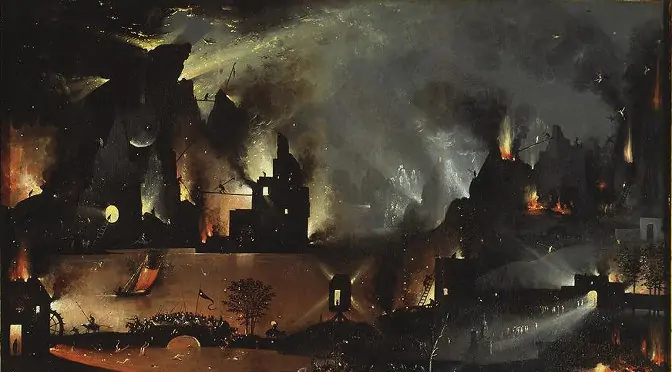
2013 – 2018 EVT – Tragic events

Gallery

This gallery contains 9 photos.

The tragic events that strike Everstate are instances of the various conditions presiding to Everstate’s destiny, considering what has been done, or not, globally, regionally and within Everstate. The same set of events will be used to stress test each … Continue reading