

Some keys to understand Chinese perceptions on the Diaoyu Islands, and to assess the potential evolution of its position in the future.
Tag Archives: crisis
How to Analyse Future Security Threats (4): Scenarios and War

This article focuses on scenarios for war. It explains first why scenarios need to be mutually exclusive. Then it provides logical templates for building scenarios dealing with war. Finally it offers an updated bibliography of scenarios for Syria over time. Towards an Operational Methodology to Analyse Future Security Threats and Political Risk (1) Methodology to …
Continue reading “How to Analyse Future Security Threats (4): Scenarios and War”
The Middle East Powder Keg and the Great Battle for Raqqa

As events accelerate both within Syria on the battlefield and in the region, this article monitors and analyse these developments. It seeks to answer the question: do the unfolding states of affairs increase, or on the contrary decrease, the likelihood to see an intensification of Turkish escalation against the Syrian Kurds and, de facto, Northern Syria? We shall look first at the race that is taking place on the Syrian battlefield around the Battle of Raqqa and towards Deir es-Zor, there addressing furthermore the entrance of a new level of Iranian influence. We shall then turn to the evolving crisis around Qatar, pointing out notably impacts on Turkey and how that crisis and the Battle of Raqqa feed into each other to heighten the risk to …
Continue reading “The Middle East Powder Keg and the Great Battle for Raqqa”
Conflict in Ukraine – Setting the Stage
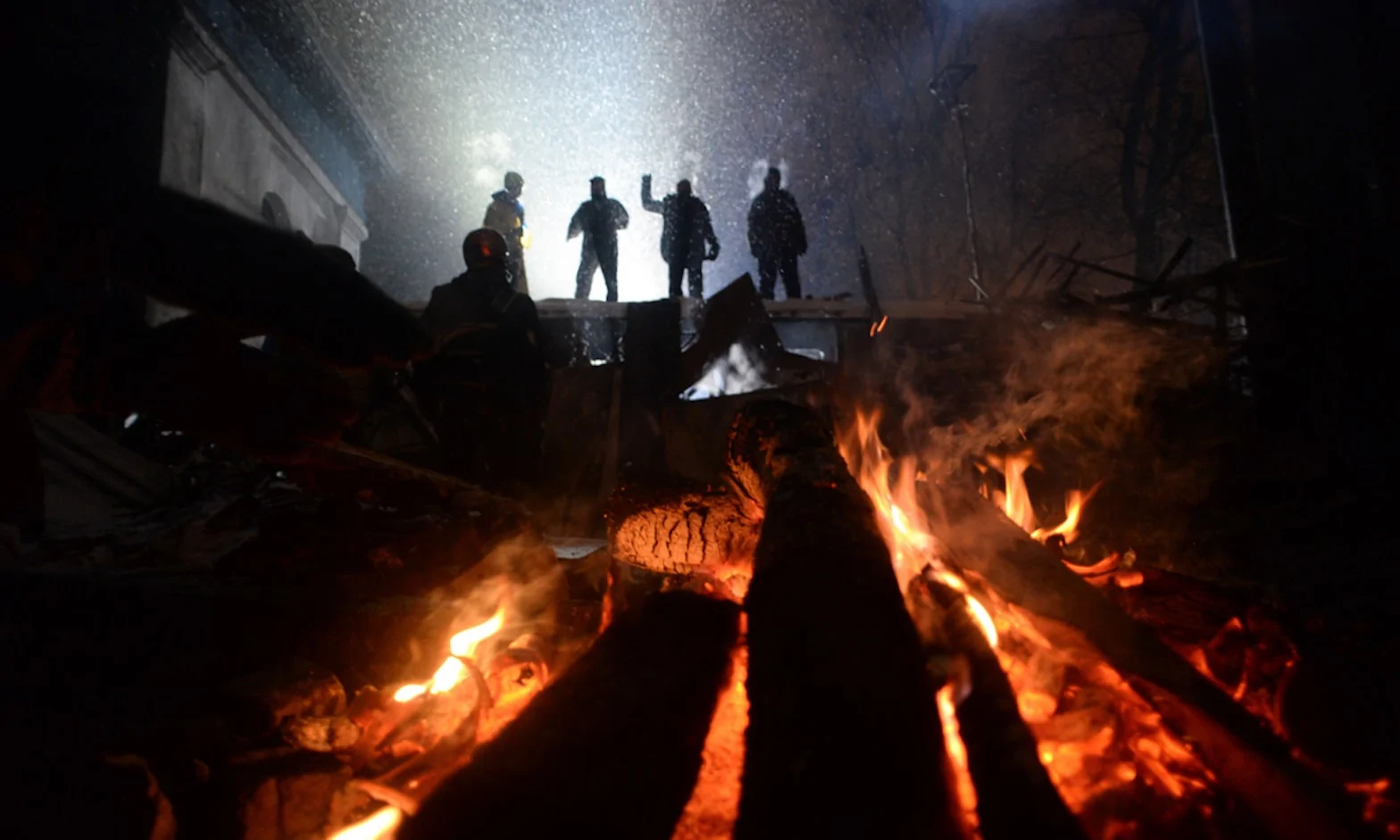
The crisis in Ukraine started on 21 November 2013 with the Euromaidan protests in Kiev. Six months later, it is threatening to become a full-blown civil war with severe global impacts, unless the situation is stabilised. As for any conflict it is important to assess possible futures and impacts at all levels. Image: Mstyslav Chernov/Unframe – CC BY-SA 3.0 This article starts a series on the conflict in Ukraine, which aims at providing the most possible useful analysis of the situation. As we did with Syria, the series will focus on the states of play for the actors and the situation on the ground, a necessary foundation for any proper strategic foresight and warning regarding the conflict. After outlining our analytical framework to overcome the difficulties related to propaganda, we shall …
Continue reading “Conflict in Ukraine – Setting the Stage”
The Red (Team) Analysis Weekly 144, Geopolitics also matters for businesses

Editorial – Geopolitics also matters for businesses – Among the big changes that the “Ukraine and Crimea crisis” are bringing or catalyzing, we may be seeing the end of the hegemonic belief that economics, and “business” only matter. Now that the E.U., its European members and the U.S. could be moving towards sanctions against Russia …
Continue reading “The Red (Team) Analysis Weekly 144, Geopolitics also matters for businesses”
The Red (Team) Analysis Weekly – 6 February 2014 – The financial system… again
Editorial – The financial system… again – The 23 January Weekly selected the contraction of the Chinese PMI as one of the signals to notice. Impacts of the China PMI drop have been felt notably in Asia, but, at least so far, not so much happened in the rest of the world. Thus, which types of warning could we …
Continue reading “The Red (Team) Analysis Weekly – 6 February 2014 – The financial system… again”
How to Analyze Future Security Threats (5): Scenarios and Crises

This article is the fifth of a series looking for a methodology that would fulfil the challenging criteria demanded by our time, notably in terms of speed and resources. The previous article focused on how to build scenarios for war. Here we look at scenarios for situations qualified as non-violent crises, taking mainly as example the crisis between China and Japan in the East China Sea over the Diaoyu (China)/Senkaku (Japan) Islands. War or crisis? It is important, first, to note that the words used in political discourses to qualify a situation may create an element of confusion when we think about an issue such as crisis, conflict and war. Actors may have many reasons for using euphemisms rather than …
Continue reading “How to Analyze Future Security Threats (5): Scenarios and Crises”
How to Analyze Future Security Threats (3): Scenarios as an Organic Living System

This article is the third of a series looking for a methodology that would fulfill the challenging criteria demanded by our time. We shall now focus on scenarios, which are a way to simulate how the actors we defined and described during the previous step interact, not only among themselves but also with their environment, up until the end of the chosen timeframe. Using the precedent post’s game of chess analogy, with scenarios we imagine the various ways the game may “end”. Towards an Operational Methodology to Analyse Future Security Threats and Political Risk (1)Methodology to Analyse Future Security Threats (2): a Game of ChessHow to Analyse Future Security Threats (3): Scenarios as an Organic Living SystemHow to Analyse Future Security Threats (4): Scenarios …
Continue reading “How to Analyze Future Security Threats (3): Scenarios as an Organic Living System”
The Red (Team) Analysis Weekly No129, 5 December 2013
Editorial – A window of opportunity to regain some legitimacy? What do Hansen’s new study on the inanity of the current goals of the international community to mitigate climate change and the Council of Europe report regarding the terrible impact of austerity measures on European citizens have in common? The answer is legitimacy, or rather …
Continue reading “The Red (Team) Analysis Weekly No129, 5 December 2013”
The Red (Team) Analysis Weekly No127, 21 November 2013
Editorial – This week, three main themes stand out. They are unsurprising as we have been following them for a while, yet they show how difficult it may be to warn about an issue, i.e. to convince a client or an audience that a signal is neither noise nor anymore weak but strong (e.g. changes …
Continue reading “The Red (Team) Analysis Weekly No127, 21 November 2013”