
Beyond Fear of Near-Earth Objects: Mining Resources from Space?

Since Friday, with the fall of a meteor in Russia’s Urals, the close fly-by of Asteroid 2012 DA14, and reports of a meteorite sighted over Cuba, a renewed interest has been shown for near-earth objects (NEOs), notably because of the threat they may constitute to the earth and its inhabitants. Yet, NEOs are not only about dangers and Armageddon scenarios, they may also well be an opportunity.  Back at the end of 2008, thinking about the resource and energy issues humanity was facing, I was wondering which “grey swans,” to use Taleb’s terminology, we were overlooking. The possibility to use resources from space emerged as a major wild card, which could completely upset all our scenarios.

From dream to reality by 2025

space, space mining, asteroid, space, resource

This idea was actually not far-fetched and very serious people were working on it.

For example, in the US, the Center for Space Resource of the Colorado School of Mines Research Center, promoted the fascinating 8th Continent Project: Bringing Space down to Earth. This Center is also part of the Space Resources Roundtable, (see their steering committee for other institutions and companies). At the University of Arizona’s Lunar and Planetary Laboratory, John S. Lewis, professor of planetary science published back in 1997 Mining the Sky: Untold Riches from the Asteroids, Comets, and Planets. It was and is a topic important enough to belong to the education resources of the NASA, e.g. Lesson 17. Asteroid Resources: The Stepping Stone to Beyond. The Keck Institute for Space Studies (KISS) at Caltech started working in September 2011 on an Asteroid Retrieval Feasibility Study (pdf), published in April 2012, “to investigate the feasibility of identifying, robotically capturing, and returning an entire Near-Earth Asteroid (NEA) to the vicinity of the Earth by the middle of the next decade, i.e. 2025.”

What could have been seen as part of a far away science fiction’s future has become very real with the launch of Planetary Resources Inc. in April 2012. A quick look at the founders, advisors and investors shows the seriousness of the venture, grounded in science, imagination, power and wealth, which also facilitates media coverage and access to future needed capital (see, for example, for an April 2012 round-up Is Planetary Resources Using a NASA Report As a Business Plan? by Keith Cowing, NasaWatch.com). The  NASA awarded a contract to US firms to study the feasibility of asteroid’s mining (Andrew Duffy, “NASA awards asteroid mining contract,” 28 September, 2012 , Australian Mining). More recently, on 23 January 2013, Deep Space Industries unveiled its creation, plans and needs (see, for example, related articles in The Guardian or in Popular Mechanics).

Meanwhile, as Planetary Resources emphasizes, using the Urals’ Meteor and Asteroid 2012 DA14 events, the new capabilities that are being developed to mine asteroids can also help in preventing the threat aspect of NEOs. The latter were notably discussed during the meeting of the Action Team-14, part of the 50th session of the Scientific and Technical Subcommittee of the United Nations Committee on the Peaceful Uses of Outer Space (COPUOS), which is serendipitously held from February 11 to 22 (Leonard David, space.com).

What would entail such a future, where resources also come from space?

It is most than likely that everything we know would be fundamentally reshaped, to start with our worldview, our Weltanschaung. With the Copernican revolution, human beings inhabiting the Western world, or rather, then the Christian world, stopped seeing themselves as the center of the universe, while the Church started seeing its demise from its central role, science developed and the modern world was being born. What could be the consequences in terms of worldview if we could now travel into space, push further the boundaries, and furthermore exchange with other spatial bodies, without being so afraid? How would the paradigm shift we are most probably living through be impacted?

Asteroid, mining, space, resource

Would we only exploit, not taking stock of the lessons we learned on earth? Would we thus go towards an even more selfish world fraught with hubris and even bitterer struggles and wars? A world where the human technological feat thus realized would bring us back towards an even more human centric system, somehow closer to the pre-modern era than to the modern one? On the contrary, would travels and long sojourn outside Earth bring us more humility, more awareness of our dependency upon the rest, of our belonging to a whole, because the Earth and its inhabitants are so infinitely small and fragile? The generalization of images of the Earth from outside its atmosphere, or even of the fact that the Earth may not be seen from other location in space, could have a very profound effect, as it would affect consciousness and imagination (as Benedict Anderson shows in Imagined Communities).

This novel type of resources, as those coming from deep-sea mining, and their multifaceted impacts should be integrated in all our judgments on the future. But is it truly the case? To take only two famous examples, the US National Intelligence Council Global Trends 2030, although dealing with resources scarcity, only considers space from the point of view of extended warfare and asteroids as the cause of possible natural catastrophe.  On the contrary, The UK MoD, Global Strategic Trends Out to 2040 (Feb 2010), not only always integrates space as a domain and an operational field, but also underlines the importance and likely rising relevance of the “exploitation of extreme environments”, including “space; the Polar regions; the deep ocean; and deep underground regions” (pp. 115-116, p.145), in the framework of resources supply (or scarcity). Unfortunately the multidimensional impact of these exploitations is not fully developed, despite two pages devoted to space (pp.152-153).

More efforts to better consider space, including resources, are necessary. In the meanwhile, we shall monitor the issue with one of our daily scans, the Space Resources Sigils.

The Space Resources Sigils

ASTEROID, MINING, SPACE, RESOURCES, scarcityThe Space Resources Sigils is part of The Sigils, a series of daily papers scanning the horizon for weak signals related to various issues relevant to the security of societies, polities, nations and citizens. They use Paper.Li as curation platform.

An opening post on the importance of space resources as their use should be a reality in the relatively near future (middle of next decade, i.e. 2025) can be found here.

The Space Resources Sigils can be read below or by clicking on the title to access the Paper.li platform (best for mobiles and tablets).


The Red (team) Analysis Weekly No84, 24 January 2013

Wars in a revised socio-economic order? The gathered signals seem to point (unsurprisingly) towards the following questions: Will there be a war between China and Japan? Will Israel attack Iran? Will a new – or rather old (similar to what existed before the birth of the Soviet Union)- economy with entrenched inequalities and the disappearance of a large middle class settles in? Shall Greece be the first to violently rebel against it?

Click on image to read on Paper.li or scroll down to access current issue below.

national security, China/Japan, future, scan, indications, weak signal

The Red (team) Analysis Weekly No76, 29 November 2012

No76 – 29 November 2012

Many signals with potential crucial strategic impacts, and among them, Egyptian President Morsi and his decree granting him absolute powers, continuing, rising discontent in Europe, and the BRIC’S move on the global financial chessboard.

Click on image to read on Paper.li or scroll down to access current issue below.
Horizon Scanning for National Security, Egypt, austerity, protests, opposition, banks, BRICS

Towards a New Paradigm?

Assessing if we are about to see a paradigm shift is twice crucial. First, and foremost, as human beings living within societies, if such a change happens, then we need to be ready for the upheavals that precede and accompany such deep revolutions, as stakes, both ideological and material, are at work to try blocking change. We also need to understand what is happening to take the right decisions in our lives, hopefully with the right timing, to mitigate adverse impacts and favour positive ones.

Belief systems: pradigm, systemic norms, religion and ideology, and models of socio-political organisationSecond, in terms of strategic foresight and warning analysis, the deepest layers of ideas organizing societies and their interactions are fundamental frameworks, within which any understanding must be located. If changes are in the making, then they will forcibly alter the future, while the present is most probably already being affected, giving rise to a feeling of unpredictability. Actually, it is not so much that there is a novel unpredictability settling in, but that the lenses through which the world is analysed and then acted upon are inadequate.

Paradigm: Modernity

Paradigms are encompassing thought patterns and related sets of practices, which “for a time provide model problems and solutions” (Kuhn, viii). The contemporary use of the word comes from Kuhn’s The Structure of Scientific Revolutions (.pdf version), and thus hard science. We use here its application to history (and social science). From a European (and Western) point of view, for example, we would thus have the Middle Age, Modernity, something new still unnamed. Through the process of modernization, Modernity has reached most of the globe with varying timing, success, depth of impact and finally versions, and is thus a paradigm that is relevant globally.

Modernity is defined by sociologist Anthony Giddens as

“associated with

(1) a certain set of attitudes towards the world, the idea of the world as an open transformation by human intervention;

(2) a complex of economic institutions, especially industrial production and a market economy;

(3) a certain range of political institutions, including the nation-state and mass democracy.

Largely as a result of these characteristics, modernity is vastly more dynamic than any previous type of social order. It is a society – more technically, a complex of institutions – which unlike any preceding cultures lives in the future rather than the past” Conversations with Anthony Giddens: Making Sense of Modernity 1998, p.94.

This is what a large part of the world has known for the last centuries, to the least for the main part of the twentieth century, and which may be about to disappear (Lavoix, 2005: 20).

Some examples of previous paradigm changes are, in Europe, the shift from pre-modern to modern time (the end of the Middle–age and the Renaissance), a similar shift taking place in the whole of Eurasia, as shown by Lieberman’s work, the Meiji Transformation in Japan, Iconoclasm in the May Fourth Era in China, to borrow Yü-sheng Lin’s title.

Signals of paradigm shift: Crisis

paradigm crisis, ideological stakesAccording to Kuhn, the paradigm switch itself is relatively sudden and unstructured. Before it happens, a crisis occurs, that is “brought about by the accumulation of anomalies under the previous paradigm.”  (Curd and Cover, 218). In science this means debates. In historical life, this is most likely to mean struggles and conflicts, while problems cannot find solutions anymore.

In our tentative application of Kuhn’s theory to history, we may either have the old and the new paradigms cohabitating with struggles between the two (and their “proponents”), or the old inefficient paradigm trying to survive attacks by those who see and understand it is not adequate anymore. The crisis would continue until a new efficient paradigm emerges and the shift (the complete adoption of the new paradigm) takes place. Upheavals are most likely to continue for a while as related human institutions are created and work at stabilising the situation.

As pointed out by Ertman in the case of the search for new adequate models of socio-political organisations, ideological and material stakes in the old paradigm, and in all institutions and layers of beliefs that are derived from the paradigm, block the full emergence of the new paradigm or the search for new solutions. The dynamics that are most likely to be at work have been presented in the Chronicles of Everstate, in a fictionalized way to ease understanding: Ideological Stakes in an Outdated Worldview and Material Stakes in an Outdated Worldview.

A paradigmatic crisis is probably progressive, with peaks but also accumulation of tension. Consciousness of the needed change probably occurs only slowly. When sufficient awareness has dawned, which, for us, may be now, then the emergence of the new paradigm, the shift itself, may not be far away; yet efforts at understanding and adapting are more than ever necessary, while the struggle to maintain the old paradigm and its advantages continues unabated and is even likely to strengthen.

The multiple crises (the environmental cliff to use the words of Jeremy Grantham, the sovereign debt crisis, the financial crisis, the global economic crisis, global water insecurity, resources depletion or insufficiency, international tensions, etc.) through which we are currently living could actually be much more than “just” the juxtaposition of unrelated crises. They could signal that we are in the midst of a paradigm crisis.

Leaving Modernity?

The shock of the heliocentric systemWe would thus be living close to a paradigm shift, which would see us leaving modernity. Such a transition would mean that our perceptions, world-views, understanding but also consequent sets of practices, change. They need to do so as they do not provide anymore for solutions, as shifts are demanded by the incapacity of the previous paradigm to help human societies making sense of the world and thus surviving. This does not imply that all previous beliefs and practices disappear, but that they may be perceived, used, interpreted otherwise, although some will also totally vanish.

Considering the huge potential impact a paradigm crisis and a shift would have, it is necessary to try monitoring if it is really happening and what is happening, to fully include the possibility of this paradigmatic change in our analyses and to be on the look out for elements of the new paradigm.

Using Giddens initial definition, we should be ready to see disappearing or considerably changing:

  1. The idea of the world as an open transformation by human intervention. For example, this questions the whole geo-engineering approach to climate change: Is geo-engineering an ultra modern approach, grounded fully in modernity and thus bound to disappear or is it, on the contrary, part of a new paradigm, besides human augmentation (the singularity approach), where the very definition of the living and its creation changes?
  2. A complex of economic institutions, especially industrial production and a market economy: Could approaches such as “do less be more” as suggested by Chris Thomson & Mike Jackson (p.20) as micro-level answer to the paradigm crisis, focusing on values and quality rather than quantity be part of the solution? Will the institutions of the Washington Consensus disappear? Will the liberal order leave place to something else that can handle the crisis?
  3. A certain range of political institutions, including the nation-state and mass democracy: Trying to make sense of the crisis in the domain of political authority and to foresee what could happen is the focus of the Chronicles of Everstate.

Before to close, I would like to quote Richard Tarnas, as he wrote a beautiful description of what a paradigm crisis and shift entailed, in the past:

“Yet it would be a deep misjudgment to perceive the emergence of the Renaissance as all light and splendor, for it arrived in the wake of a series of unmitigated disasters and thrived in the midst of continuous upheaval. Beginning in the mid-fourteenth century, the black plague swept through Europe and destroyed a third of the continent’s population, fatally undermining the balance of economic and cultural elements that had sustained the high medieval civilization. Many believed that the wrath of God had come upon the world. The Hundred Years’ War between England and France was an interminable ruinous conflict, while Italy was ravaged by repeated invasions and internecine struggles. Pirates, bandits and mercenaries were ubiquitous. Religious strife grew to international proportions. Severe economic depression was nearly universal for decades. The universities were sclerotic. New diseases entered Europe through its ports and took their toll. Black magic and devil worship flourished, as did group flagellation, the dance of death in cemeteries the black mass, the Inquisition, tortures and burnings at the stake. Ecclesiastical conspiracies were routine, and included such events as a papally backed assassination in front of the Florentine cathedral altar at High Mass on Easter Sunday. Murder, rape, and pillage were often daily realities, famine and pestilence annual perils. The Turkish hordes threatened to overwhelm Europe at any moment. Apocalyptic expectations abounded. And the Church itself, the West’s fundamental cultural institution, seemed to many the very center of decadent corruption, its structure and purpose devoid of spiritual integrity. It was against this backdrop of massive cultural decay, violence, and death that the “rebirth” of the Renaissance took place.” The Passion of the Western Mind, (Pimlico, 1996 [1991]), p.225.

———

Curd, Martin and Cover, J.A., “Commentary on Kuhn’s Structure of Scientific Revolution” in Philosophy of Science: The Central Issues, ed. Curd and Cover, (New York : W.W. Norton & Company, 1998).

Ertman, Thomas. Birth of the Leviathan : Building States and Regimes in Medieval and Early Modern Europe. Cambridge, UK ; New York: Cambridge University Press, 1997.

Giddens, Anthony  and Christopher Pierson, Conversations with Anthony Giddens: Making Sense of Modernity, (Stanford University Press, 1998).

Grantham, Jeremy, “Be persuasive. Be brave. Be arrested (if necessary),” Nature 491, 303, 15 November 201, doi:10.1038/491303a.

Jackson, Mike, “Global Change of Paradigm,” Shaping Tomorrow, 20 June 2012.

Kuhn, Thomas S., The Structure of Scientific Revolutions, International Encyclopedia of Unified Science, Volume 2, Number 2, (Chicago: The University of Chicago, 1970 [1962]).

Lavoix, Helene, Indicateurs et méthodologies de prévision des crises et conflits: Evaluation, (Paris : AFD, December 2005).

Lieberman, Victor, B. “Local Integration and Eurasian Analogies: Structuring Southeast Asian History, c.1350-c.1830;” Modern Asian Studies 27, 3 (1993), pp 475 -572

Lieberman, Victor, B., Strange Parallels, Southeast Asia in Global Context, c.800-1830 Vol.1 Integration on the Mainland (Cambridge: Cambridge University Press, 2003).

Lin Yü-Sheng, The Crisis of Chinese Consciousness: Radical Antitraditionalism in the May Fourth Era, (Wisconsin: The University of Wisconsin press, 1979).

Tarnas, Richard, The Passion of the Western Mind: Understanding the Ideas That Have Shaped Our World View, (London: Pimlico, 1996 [1991]).

Thomson, Chris,  & Jackson,Mike  New Purpose, May 2012, Shaping Tomorrow.

Pattern – Towards Polarization in the Western World?
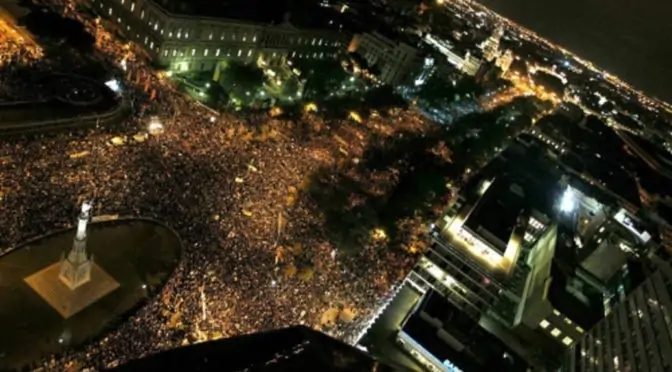
The Pattern series will look at current pieces of information taken most often in group or cluster. Briefly, it will underline the pattern that could be emerging, what it means, potentially, for the related issues we follow. 

Following the 14 November 2012 strikes, the likely pattern that is emerging is a rising polarization within Western society – or societies – with more demonstrations and protests in the near future, which will probably expand in terms of participation, geographical scope and content of demands. Dismissal – easily interpreted as despise – absence of satisfying answer and feeling of unfairness will most likely enhance tension, opening the door to violence under various forms.

Analysis

As a consequence of the responses given by governments to the financial institutions and sovereign debt crisis, austerity policies, protests have spread throughout the Western world since March 2011. On 14 November 2012 a Europe-wide strike was organised and saw millions of demonstrators taking to the streets with variations according to countries. The demonstration shows a rising coordination across countries and mobilization of citizens. It is however still mainly peaceful despite sporadic violence.

#14N: millions join largest European strike ever, Jerome Roos, Reflections on a Revolution ROAR: Street battles break out and large parts of Europe are paralyzed as millions of workers walk off their jobs in the biggest coordinated EU…

The general demonstration occurred as the Euro zone was not yet considered as being in recession. However, as now recession is official and expected to last, then the causes for the mobilization remain, letting us expect more protests to come.

Euro zone seen sinking into recession as Germany struggles, Robin Emmot,  BRUSSELS, Nov 15 (Reuters): French economy seen stagnating; Germany to grow just 0.2 pct; The euro zone likely slipped in…

If peaceful protests are, however, considered as useless, notably by the conservative and liberal financial establishment, then it is most likely that demands will not be heard, and worse, that peaceful demonstrations will be dismissed. It may be seen as the real response to the demonstration, actually a hardened position. As recession may also increase the fear of diminishing profits, then a softening posture is unlikely. Furthermore, one may also imagine that a continuing recession added to failed efforts by demonstrators to bring about change would be an opportunity to actually increase profits – and power – on the short and medium term by breaking any opposition, thus by changing the second half of the 20th century related balance of power. This would also imply a tendency towards a harsher position.

Big Europe Strikes Have Little Effect, Wall Street Journal: General strikes and sporadic violence against government austerity programs racked Spain, Portugal and Greece, but they appeared unlikely…

The Red (team) Analysis Weekly No73, 8 November 2012

No73 – 8 November 2012

Click on image to read on Paper.li or scroll down to access current issue below.

Horizon Scanning for National Security

The Red (team) Analysis Weekly No72, 1 November 2012

No72 – 1 November 2012

Some weak signals towards a change of paradigm, besides the usual tense hotspots and their aftermaths – which do contribute to the change of paradigm. Maybe an opening window of opportunity that might ease the escalation Israel-Iran… “maybe” because, there, signals are contradicting.

Click on image to read on Paper.li or scroll down to access current issue below.

2012 EVT – New Government, New Opposition, Last Hope (Panglossy)
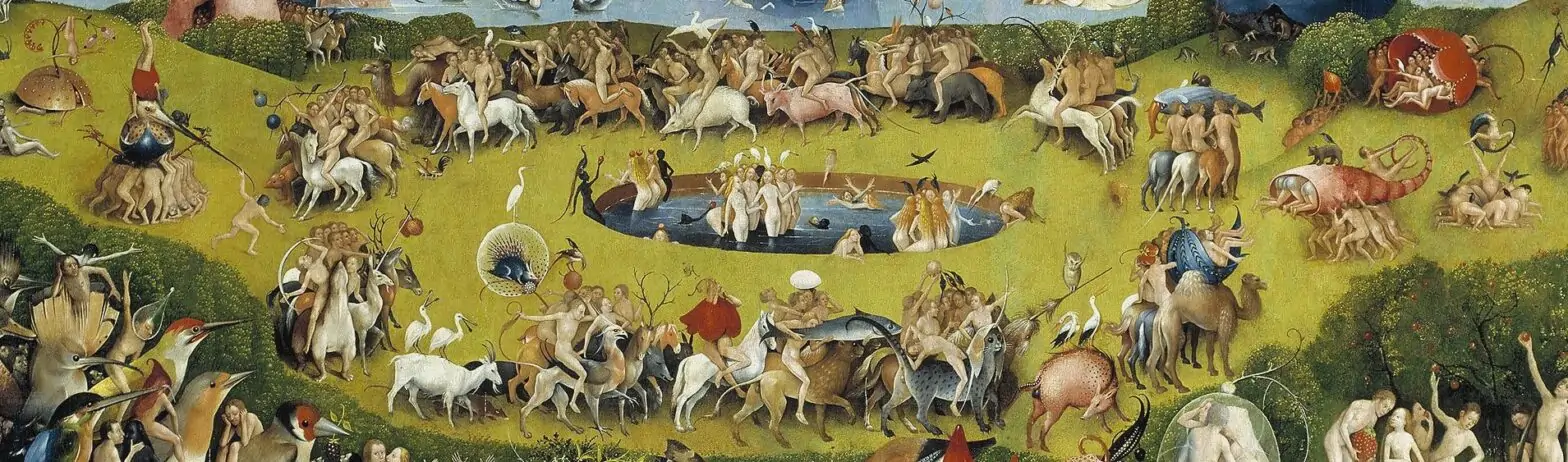
Last weeks’ summary: In 2012 EVT, Everstate (the ideal-type corresponding to our very real countries created to foresee the future of governance and of the modern nation-state) knows a rising dissatisfaction of its population. Alarmed by the rising difficulties and widespread discontent, the governing authorities decide to do something when new elections start. Dependent upon programmes created to face efficiently past challenges, prisoners of entrenched political groupings, comforted in their vision by the BRICS’ success and renewed optimism, the major parties campaign to come back to the order ante. As a result, habits and the existing system, once the new national representatives are elected and the new government starts ruling, are even more entrenched, almost ossified.

(The reader can click on each picture to see a larger version in a new tab - navigating map of posts is available to ease reading).

Yet, something unexpected, dismissed or rather minimised by observers, is also happening during the months leading to the election: the rise of small and sometimes polarised parties, accompanied by an increase in the political mobilisation outside currently eligible parties. In this, Everstate is just exemplifying what is happening all over the Western world.

For example, in May 2012, in Germany in North Rhine-Westphalia, the new Pirate Party again fares very well. In France, the results of the first round of the Presidential elections shows a strong rise of parties on the extreme left and right of the political spectrum. In Greece, thirty-two parties compete during the first May elections, and seven, including those positioned at the extreme, win seats in Parliament. Meanwhile, the Occupy and Democracia Real Ya! – also known as Indignados – movements, born out of Spain’s mobilisation a year before, show their continuing presence, with various protests staged on May Day, then between 12 and 15 May, with varying participation rates. Signs of polarisation can also be found here. #Anonymous, in general, backs those movements from and in the virtual world, besides other operations, and represent a political force and not a criminal activity as some would like to interpret it.

Indeed free association, free speech and free assembly, enhanced by the new technological means of communication and mobilization, added to the general dissatisfaction while security is still being sought, create new extra-parliamentary organisations and mobilizations because the programmes of the classical parties and existing parliamentary groupings do not answer anymore the needs of the citizens and of the nations. The fluidity of the situation, the diversity of the types of organisations and the various stages of polarisation are symptoms of systems trying to evolve and redesign themselves, of the need for radically new programmes, which are in the making, as the underlying socio-political model are outmoded and do not offer any easy efficient solution.

As far as Occupy Everstate is concerned, they have to face some very difficult issues. What gave them their strength and made them truly representative, notably in terms of concerns and identification of crucial issues for the overall security of the nation, their faith in a fully democratic process, also constitutes an impediment as it slows and even sometimes block their decision process. Their main means of action, peaceful protests and sit-ins, so far has not allowed seeing their demands satisfied. Their successes are however far from negligible as they are now part of the political landscape, and are thus heard, when one year ago they were systematically ignored, and as they have succeeded in raising awareness to the plight of the many. Yet, the old ideas and habits they fight are as pregnant, powerful and ruling as ever.

Some groups within the movement are getting tired of obtaining nothing, of seeing the status quo continuing, while they start meeting difficulties to mobilise people. They are following the American debate existing over the “diversity of tactics.” Should they move away from the essential original non-violence – including the respect of laws and of property – of the movements to the “diversity of tactics” which includes also “property damage and armed retaliation against the police” but NOT “extremist tactics such as planting bombs and armed insurrection? (Bramhall, March 2012). True to the democratic foundation of the movement, the general answer is to convene a General Assembly to vote. However, lengthy debates have now been going on for days and nothing is solved. Furthermore the example of the Pirate Party also tempts Occupy Everstate. Should they register formally? This would allow them, maybe, entering parliament and developing their programme, and more important, getting things done (for the leadership and organisation debate going on in Spain, see Tremlett, May 2012). Yet, would they not also loose part of their soul, of their raison d’être? The tension is growing within the movement, while some actions abiding to the “diversity of tactics” start, still very rare, but yet, they happen.

The result of the new elections seems to freeze the contractions that agitate Occupy Everstate. Could this new government, maybe, bring Everstate back to where it was before life became so hard, before unfairness became unbearable, before the only way forward seemed to go to the streets to be heard or even worse? Nobody wants to sleep in the street, to be poor, to be condemned to unemployment, and even less to fight and risk one’s life. This hope, this last hope, isn’t it worth giving it a chance?

To be continued

——

References

Stuart Jeanne Bramhall in “Debating Violence in the Occupy Movement,” Take The Square, 3 March 2012.

Giles Tremlett, “Spain’s indignado protesters face anniversary crackdown,” Guardian.co.uk, 11 May 2012.

Images

Official logo of the Swedish Pirate Party (Piratpartiet) by Piratpartiet [Public domain], via Wikimedia Commons.

The OccupyCal General Assembly approves of… something. November 15 2011 by Daniel Parks from Berkeley, United States (Fingers Up) [CC-BY-2.0 (http://creativecommons.org/licenses/by/2.0)], via Wikimedia Commons. This image was originally posted to Flickr by D.H. Parks at http://flickr.com/photos/8073513@N03/6349212141. It was reviewed on 21 November 2011 by the FlickreviewR robot and confirmed to be licensed under the terms of the cc-by-2.0.

2012 EVT: Material Stakes in an Outdated Worldview (The Chronicles of Everstate)

Last week’s summaryIn 2012 EVT, Everstate (the ideal-type corresponding to our very real countries created to foresee the future of the modern nation-state) knows a rising dissatisfaction of its population as authorities cannot anymore deliver security. The last phenomenon driving Everstatan governing bodies’ rising inefficiency in ensuring their mission is an outdated worldview that leads to misunderstanding and disconnect, which is first upheld by ideological stakes.

(The reader can click on each picture to see a larger version in a new tab - a navigating map of posts is available to ease reading).


The knowledge institutions and related people, which are guardians of norms and thus have ideological stakes in upholding an outdated worldview, are also motivated by material stakes in seeing norms respected, upheld and continuing. Indeed, their institutional  survival depends on the continuation of those models, for example, through funding and employment.

Even if some or most within those institutions (again with variations according to their exact normative function) are increasingly aware that models have to be revised – but how far and how deep – being the first to do so could mean being cast away and thus losing both status and income. Individuals within institutions are caught in a system similar to traders on the stock exchange in the period preceding the burst of a bubble.

Furthermore, as the lender nexus and other elite groups benefit from the new means to appropriate public power, as those appropriations are permitted by the current model and underlying norms and thrive from the lack of real understanding, then those elite groups also have a material stake in seeing the current model and norms remaining in power. This is even more the case that some of those elite groups gained status as well as income only because of the absence of adequate models. If another model of socio-political organisation existed that allowed Everstate to face the new pressures, ensure security and thus bring back the satisfaction of the population then those elite groups would lose power. They are thus most unlikely to willingly abandon their new found or reinforced privileges.

If or when new understanding and new models, possibly with the slower creation of new norms and beliefs emerge, this will create new elite groups while the discarded model will imply the disappearance of existing elite group. Those new and disappearing elite groups will not only be related to understanding and knowledge as well as needed skills but also to the disappearing and emerging needed resources, that will then be fully integrated within the new model.

Any attempt at proposing something new or different is thus, for now, either muted or remoulded in agreement with the existing paradigm. Its authors, if they are too weak institutionally, are either marginalised or bought in to the price of the novelty of their ideas. In one way or another, new ideas are not heard.

Thus beliefs outlast the situation. As beliefs constrain understanding, which in itself conditions actions, a growing disconnect takes place between reality and actions. As actions disregard reality, they may only imply further dissatisfaction and become essentially increasingly escalating in terms of tension and scope of grievances.

For example, in other countries, protests then violence had followed an escalating pattern. For the initial phases, that looks very much like what is happening in Everstate. There, the trigger had been, surprisingly for the government and the elite, an increase in food prices. Yet, such increases had been constant over the past three years. This new price rise had not even been major. People had been thought to be used to those increases that were, anyway, expected. Furthermore, people had been repeatedly told that such inflation was not that important because the prices of so many other items, including wages, were not increasing, which showed, from the economy and monetary experts’ point of view that there was no real generalised inflation. Obviously, the monetary and economy gurus had forgotten to consider that seeing constant increase in food prices while wages were remaining stable would soon become a major problem in real life for real people. They had also forgotten that despite beliefs in the law of the market, the demand for some vital goods was inelastic, and that related shortage was not an option. Those would be translated in political terms rather than nicely remain within the sole economic field. Thus, the analytical tools set up by experts were congruent with the model and the norms, but so far away from reality that escalation and tension could not only rise unnoticed, but also be dismissed. When violence exploded, it took everyone by surprise. The strength of the norm is such that quickly an explanation fitting the model and avoiding possibly questioning it surfaces: the revolutions that took place could be explained by the need to embrace the democratic model, not by any other need.* Thus, from the normative point of view, Everstate, being a democracy and having been for quite a while, can learn no lessons from those other protests and their escalation, as they bear no resemblance whatsoever with what is happening in Everstate… or so the model says.

The situation into which Everstate and the normative world to which it belongs find themselves is blocked.

The people and the nation, composed actually of the same people, are twice discontented: first, as people, they have to pay for the elite, adjust to new less than pleasant working and living conditions; second, as ruler, they are seeing their power dwindling. Furthermore, fear and anxiety starts spreading as understanding either lacks or appears by bursts, soon to be muted while meaninglessness settles.

The situation is increasingly unsustainable and leads Everstate to its loss.

As the people and the nation start taking actions to express their discontent and see their goals met, their representatives begin considering changing the situation as continuing delivering security to citizens is the only way for them to still govern thus to remain in power.

But what can be done? And by whom?

——–
* The inspiration for this paragraph comes from the 2008 food riots, as well as from the winter and spring protests and rebellions that occurred in the Middle East and North Africa. For a very interesting article on Egypt suggesting very early a different interpretation, read, for example, Walter Armbrust: “A revolution against neoliberalism? If rebellion results in a retrenchment of neoliberalism, millions will feel cheated,” Al Jazeera English, 24 Feb 2011, This article first appeared on Jadaliyya.